
Ssemble: review, pricing and alternatives
What is Ssemble and Who is Behind It?
When I first stumbled upon Ssemble, I was immediately intrigued by its promise: an AI-powered video editing tool specifically designed to transform long-form content into engaging short-form videos. In an era where platforms like TikTok, YouTube Shorts, and Instagram Reels dominate attention spans, tools that streamline content repurposing are invaluable. Ssemble emerged onto the scene to address this very need, offering creators a way to keep up with the insatiable demand for bite-sized, viral content without getting bogged down in manual editing.
At its core, Ssemble is an AI video clipper. Its primary purpose is to automate the often-tedious process of identifying the most compelling moments from longer videos, extracting them, and then optimizing them for various social media platforms. While the exact launch year isn't explicitly highlighted in my research, its presence and user base suggest it's been actively developing and serving creators for a reasonable period, establishing itself as a go-to solution for those looking to maximize their content's reach across different channels. It's built for efficiency, aiming to save countless hours that content creators, marketers, and social media managers would otherwise spend manually sifting through footage.
The vision behind Ssemble seems to be empowering creators to do more with less. Instead of needing advanced editing skills or dedicating significant time to finding and polishing short clips, Ssemble steps in as an intelligent assistant. It’s about leveraging artificial intelligence to handle the grunt work, allowing users to focus on the creative narrative and strategic distribution. This focus on automation and accessibility is what truly defines Ssemble's mission in the competitive landscape of video editing software.
Key Features: AI Video Clipping & Editing Tools
What really makes Ssemble stand out, beyond its core promise, is the robust set of features it packs into its platform, all geared towards making short-form video creation as effortless as possible. I’ve seen many tools claim AI capabilities, but Ssemble genuinely delivers a comprehensive suite that covers most aspects of transforming a long video into a polished short.
The cornerstone of Ssemble's offering is its AI highlight detection and auto-clipping. This is where the magic truly begins. You feed it a long video, and its AI algorithms get to work, identifying the most engaging, viral-worthy segments. It’s not just randomly cutting; it's designed to understand context and audience engagement. Once these highlights are detected, Ssemble automatically clips them into ready-to-use segments. This feature alone is a massive time-saver, eliminating hours of manual scrubbing through timelines.
Beyond the initial clipping, Ssemble provides a range of essential editing tools to refine these clips. Smart cropping automatically reframes shots to fit vertical formats like TikTok and YouTube Shorts, ensuring your content looks professional on every platform. Auto captions are another game-changer; Ssemble generates subtitles to boost accessibility and watch time, and crucially, you can easily edit their style, timing, and wording. For visual appeal, it includes B-roll insertion to add dynamic visuals, a variety of transitions and effects to maintain pace and polish, and even the ability to add CTA overlays. These calls to action can be anything from 'follow for more' to 'link in bio,' driving engagement and conversions directly within the video.

How Ssemble Works: Getting Started & Workflow
Diving into Ssemble's workflow, I found it to be surprisingly intuitive, even for someone who might not be a seasoned video editor. The platform is designed with a clear, step-by-step process that guides you from raw footage to export-ready clips, making the journey feel less daunting and more like a guided experience.
The first step, as you might expect, is to import your long video or recording. Ssemble handles various video formats, and I appreciate that it doesn't limit you to just YouTube links; you can upload your own files too. Once your video is in, you select your target platform – TikTok, YouTube Shorts, Instagram Reels – and the desired aspect ratio. This is crucial because Ssemble then knows how to best optimize your content for that specific channel. You can also choose a style or template at this stage, giving the AI some initial guidance on the aesthetic you're aiming for.
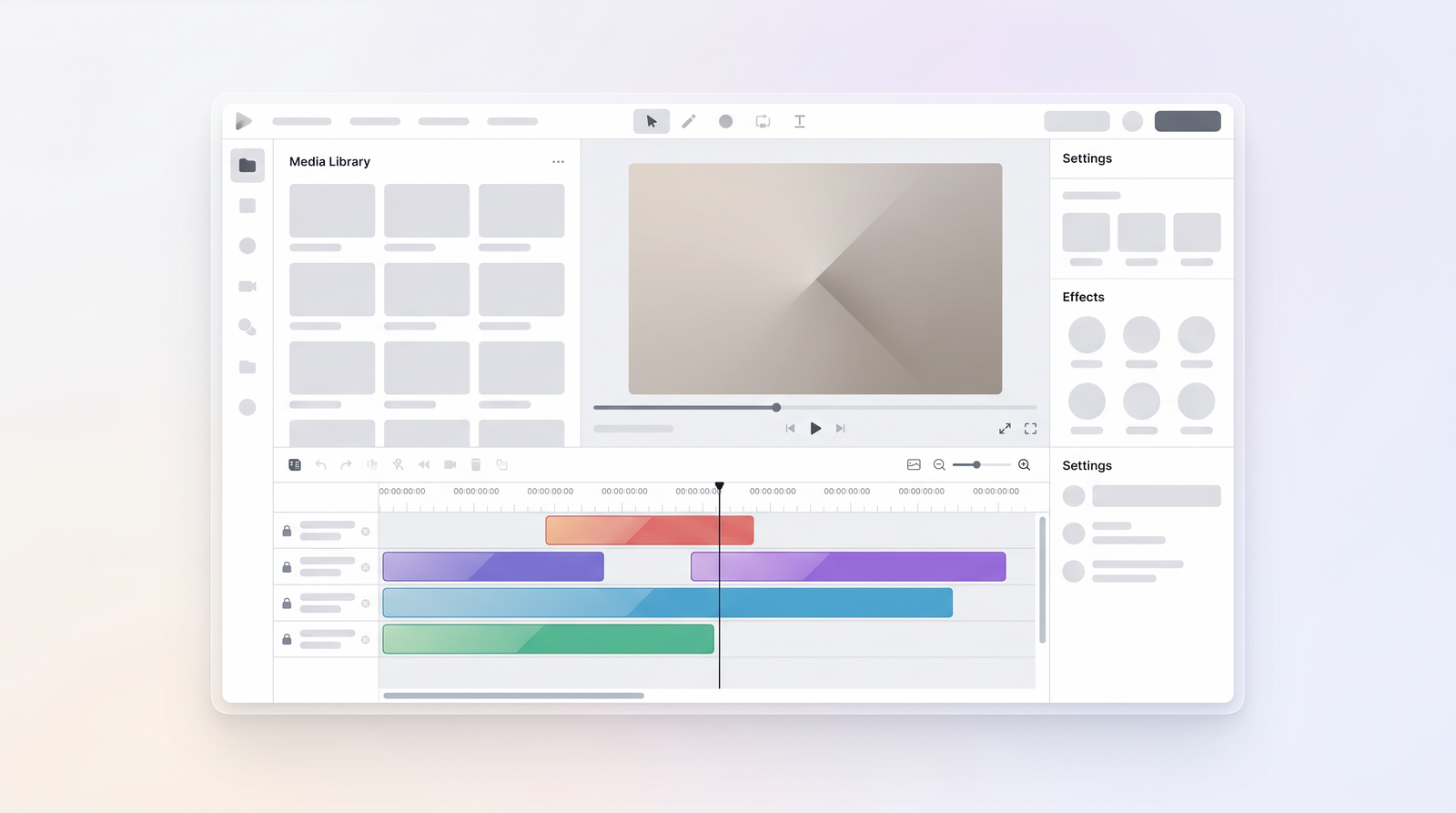
Next comes the core AI process: you run the AI clipper. This is where Ssemble's intelligence takes over, detecting highlights and automatically generating a series of short segments. What I really value about this stage is that it's not a 'set it and forget it' kind of deal. After the AI has done its initial pass, you're presented with a timeline where you can review and refine the clips. This means you can trim segments, adjust the auto-generated captions for accuracy or style, and fine-tune the smart cropping if you feel the AI missed something. You also have the opportunity to add or replace B-roll, tweak transitions, and layer sound effects or CTAs, ensuring each clip perfectly aligns with your brand and message. Finally, you preview each clip to check pacing, readability, and platform fit before exporting your platform-ready files, which maintain quality and reduce the need for further rework.
Ssemble Pricing Plans and Value for Money
When considering any new tool, especially one that promises to save you significant time, the pricing structure is always a critical factor. Ssemble positions itself as an affordable option, and from what I've seen, it genuinely offers competitive value, particularly when compared to some of its rivals. The research indicates plans range from an accessible $6 per month up to around $60 per month, which offers a good spectrum for different user needs and budgets.
What truly stands out is that even at its lower tiers, Ssemble provides substantial functionality, making it a viable option for individual creators or small businesses just starting out with short-form content. As you move up the tiers, you generally unlock more processing minutes, advanced features like a wider range of B-roll options, more sophisticated transitions, or perhaps higher-resolution exports and priority support. This tiered approach means you're likely paying for what you truly need, rather than being forced into an expensive package packed with features you might never use.
Many users, myself included, find Ssemble to be more affordable than some of its direct competitors, like Opus Clip, while still delivering comparable — and in some areas, even superior — clipping quality and a broader range of editing features. This balance of cost-effectiveness and robust functionality makes Ssemble a compelling choice for anyone looking to scale their short-form video production without breaking the bank. It democratizes access to sophisticated AI video editing, which I think is a huge win for the creator economy.
| Plan | Price | Best for |
|---|---|---|
| Starter | From $6/month | Individual creators, hobbyists, or those with light short-form content needs. |
| Pro | Mid-tier (e.g., ~$20-30/month) | Growing creators, social media managers, small businesses needing more minutes and advanced features. |
| Business/Agency | Up to $60/month | Agencies, marketers, or high-volume content producers requiring extensive usage and full feature set. |

Ssemble Pros and Cons: User Feedback Analysis
After sifting through various user experiences and reviews, a clear picture of Ssemble's strengths and weaknesses emerges. It's never a perfect tool, and Ssemble, like any software, has its shining moments and areas where it could improve. My own experience, combined with what I've gathered from other users, paints a balanced view.
On the positive side, the recurring praise for Ssemble often centers on its incredible time-saving capabilities. Users consistently highlight how efficiently it generates shorts from long videos, drastically cutting down on manual editing hours. The affordability is another huge plus; many compare its cost favorably to competitors like Opus Clip, noting that Ssemble offers comparable AI clipping quality often at a lower price point. The auto-captioning feature also receives high marks for its accuracy and the ease with which users can edit and style the captions. Furthermore, the inclusion of more advanced editing features like auto B-roll, transitions, sound effects, and zoom animations is frequently cited as a significant advantage over simpler clipping tools.
"Ssemble saves me a lot of time generating shorts from long videos, and adding captions is a plus. It's more affordable than Opus Clip with better clipping."
However, it's not all smooth sailing. One notable complaint I encountered, particularly from a YouTube review, was about disappointing clip quality for some specific videos. While many laud its clipping, this suggests that the AI's performance might vary depending on the original video's content, style, or complexity. This inconsistency can be frustrating if you're relying on it for high-stakes content. Another significant point of contention, though unrelated to the core product's video editing capabilities, involves the affiliate program. There have been instances where affiliates reported issues with payout, specifically regarding the requirement to provide direct proof of organic promotion on platforms like Facebook, which can be difficult if accounts are locked or private. This points to potential administrative or policy-related issues that could affect those looking to partner with Ssemble.
Performance, Ease of Use, and Learning Curve
When I evaluate a tool like Ssemble, I always ask myself: how quickly can a new user get up to speed, and how reliably does it perform its core functions? For Ssemble, I can confidently say that its performance in automating tasks is generally robust, and its ease of use is one of its strongest selling points, especially for those new to AI video tools.
The platform’s user interface is clean and straightforward, designed to guide you through the clipping and editing process without unnecessary complexity. I found the initial setup and video import process to be very intuitive. The steps are logical: upload, let the AI analyze, review, and refine. This linear workflow significantly reduces the learning curve. You don't need to be an expert video editor to navigate Ssemble; its design seems to cater to creators who want quick, efficient results without diving deep into complex timelines and effects panels. This makes it incredibly user-friendly for beginners or those simply looking to repurpose content rapidly.
In terms of efficiency, Ssemble largely delivers on its promise. The AI highlight detection and auto-clipping functions work quickly, turning hours of footage into digestible shorts in a fraction of the time it would take manually. While, as noted in the cons, the quality of the AI-generated clips can occasionally vary, the overall speed and automation it provides are undeniable. The review and refinement stages are crucial here, as they allow you to easily tweak anything the AI might have missed or misinterpreted, ensuring you maintain creative control without sacrificing the time-saving benefits. For anyone looking to automate repetitive editing tasks, Ssemble offers a smooth and efficient experience that genuinely helps streamline content production.
Who is Ssemble Best For? Ideal Use Cases
Understanding who a tool is best for is crucial for determining its true value, and Ssemble has a very clear target audience. From my perspective, and based on the collective user feedback, Ssemble truly shines for individuals and teams who are actively engaged in creating and distributing short-form video content across multiple social media platforms. It's not necessarily for professional film editors cutting a feature film, but rather for those focused on maximizing reach and engagement in the digital sphere.
The primary beneficiaries are undoubtedly shorts creators – individuals focused on platforms like TikTok, YouTube Shorts, and Instagram Reels. If you're constantly churning out content and need a way to quickly identify and package viral moments, Ssemble is an absolute lifesaver. Similarly, social media managers and marketers will find immense value. They often need to repurpose longer brand videos, webinars, or interviews into dozens of short clips for various campaigns. Ssemble's automation drastically reduces the workload associated with this task, allowing them to focus more on strategy and less on manual editing.
Beyond these core groups, Ssemble also serves a broader range of users. Podcasters can easily convert their long-form audio-visual content into engaging video snippets for promotion. Educators can take lengthy lectures or tutorials and distill them into bite-sized learning modules. Even startups looking to showcase product demos or testimonials in a quick, attention-grabbing format will find Ssemble incredibly useful. Essentially, if you have long-form video content and a need to consistently generate high-quality, platform-optimized short clips efficiently, Ssemble is designed precisely for you.
Ssemble Alternatives and Competitor Comparison
In the rapidly evolving landscape of AI video tools, Ssemble isn't operating in a vacuum. There are several alternatives, with Opus Clip often cited as its direct competitor. When I look at how Ssemble stacks up, it's clear that it holds its own and, in some aspects, even pulls ahead, offering a compelling blend of features and cost-effectiveness.
Opus Clip is a very capable AI clipping tool, and it was certainly one of the first to gain significant traction in this niche. However, Ssemble often gets praised for matching Opus Clip's core AI clipping quality while offering a more expansive set of editing features. What I mean by this is that Ssemble doesn't just clip; it provides more robust options for refining those clips directly within the platform. This includes the aforementioned auto B-roll insertion, a wider array of transitions, sound effects, and zoom animations, which give you more creative control without needing to export to another editor.
The cost factor is also a significant differentiator. Many users find Ssemble to be more affordable, providing a similar or enhanced feature set at a lower price point. This makes it a more accessible option for creators and businesses with tighter budgets. While both tools aim to automate the repurposing process, Ssemble's commitment to integrating more post-clipping editing capabilities directly into its workflow, combined with its competitive pricing, often gives it an edge for users who want a more all-in-one solution. You can see how it stacks up against alternatives on Top10k to get a broader perspective on its market position.
Is Ssemble Worth It? Final Verdict
After thoroughly exploring Ssemble's features, workflow, pricing, and user feedback, my final verdict is that Ssemble is absolutely worth considering for a specific segment of content creators and marketers. It's not a universal solution for every video editing need, but for its intended purpose, it excels remarkably well. If your goal is to efficiently repurpose long-form video content into engaging, platform-optimized short-form clips for social media, Ssemble delivers significant value.
What truly makes Ssemble a worthwhile investment is its ability to drastically cut down on the time and effort traditionally required for this kind of content creation. The AI highlight detection, auto-clipping, and smart cropping are powerful tools that genuinely automate much of the grunt work. Add to that the convenient auto-captions, B-roll insertion, and CTA overlays, and you have a comprehensive package for rapid content deployment. Its affordability, especially when compared to some alternatives, further sweetens the deal, making advanced AI video editing accessible to a wider audience.
However, it's important to set realistic expectations. While the AI is generally impressive, some users have reported occasional inconsistencies in clip quality, meaning a final human review and potential minor adjustments are always recommended. And if you're an affiliate, be mindful of their specific payout requirements. But for the vast majority of shorts creators, social media managers, and marketers looking to scale their content output without sacrificing quality or breaking the bank, Ssemble is a highly recommended tool that genuinely streamlines the content repurposing workflow.
Full profile and live ranking: https://top10k.com/ai/ssemble
Published by

Top10k Tools stands as a browser-based toolkit packed with thousands of free online tools built to make daily work easier.
It spans everything from SEO and coding to file converters, image tools, and handy calculators. Each tool runs right in the browser, so there's nothing to install.
Top10k Tools is working toward reaching 10,000 useful web tools for work, study, and daily life.
Great for marketers, coders, students, and entrepreneurs, there's likely a tool that fits. Give it a try.
Frequently asked questions
What is Ssemble primarily used for?
Ssemble is an AI video clipping tool designed to transform long-form videos into engaging short-form content for platforms like TikTok, YouTube Shorts, and Instagram Reels. Its main purpose is to automate the process of identifying, extracting, and optimizing viral-worthy video segments.
What are Ssemble's key features?
Key features include AI highlight detection and auto-clipping, smart cropping for different platforms, automatic caption generation (with editing options), B-roll insertion, transitions, effects, and the ability to add call-to-action (CTA) overlays.
How much does Ssemble cost?
Ssemble offers various pricing plans, starting from as low as $6 per month for basic usage, and going up to around $60 per month for more extensive or professional needs. It is generally considered an affordable option compared to some competitors.
Is Ssemble easy to use for beginners?
Yes, Ssemble is designed with a very intuitive and straightforward workflow, making it user-friendly even for those without extensive video editing experience. Its guided process and automated features significantly reduce the learning curve.
How does Ssemble compare to Opus Clip?
Ssemble is often compared favorably to Opus Clip, matching its AI clipping quality while often offering more integrated editing features such as B-roll, transitions, sound effects, and zoom animations. It also tends to be more affordable.
Are there any known downsides to using Ssemble?
Some users have reported occasional inconsistencies in the quality of AI-generated clips for specific video types. Additionally, there have been complaints regarding Ssemble's affiliate program payout requirements, which can be challenging to meet.
Who is the ideal user for Ssemble?
Ssemble is best suited for shorts creators, social media managers, marketers, podcasters, educators, and startups who need to efficiently repurpose long videos into multiple short, platform-optimized clips for social media engagement.
Does Ssemble offer a free plan or trial?
While the research doesn't explicitly state a free plan, the starting price of $6/month suggests an accessible entry point. Many similar tools offer free trials, so it's advisable to check Ssemble's official website for current trial options.